

Back to top
Send SMS Send Inquiry
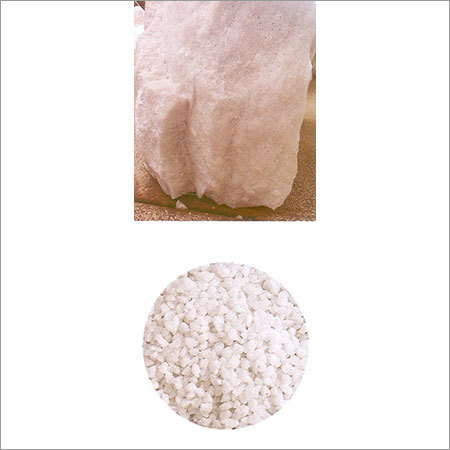
Ferrosilicon Nitride

Ferrosilicon Nitride

Ferrosilicon Nitride Specification

  • Melting Point
  • About 2200C
  • Application
  • Widely used as a refractory material with high strength and thermal stability, mainly in blast furnace tap hole areas and iron troughs
  • Hardness (%)
  • High (approx. 9 Mohs)
  • Surface Finish
  • Fine powder or granular
  • Chemical Composition
  • Si3N4, Fe, Si, N
  • Water Absorption
  • < 1.5%
  • Purity(%)
  • > 98%
  • Form
  • Powder/Granule
  • Density
  • 2.5 Gram per cubic centimeter(g/cm3)
  • Usage & Applications
  • Production of refractory bricks, tap hole clay, blast furnace lining, metallurgy, ceramics industry
  • Product Type
  • Ferrosilicon Nitride
  • Types of Refractories
  • Nitride bonded refractories
  • Shape
  • Powder or granule
  • Porosity
  • Low apparent porosity (< 25%)
  • Dimensional Stability
  • Excellent stability at high temperatures
  • Strength
  • High mechanical strength, especially at high temperatures
  • Specific Gravity
  • 2.62.8
  • Thermal Conductivity
  • Low
  • Color
  • Gray to dark gray


About Ferrosilicon Nitride

The company has brought the ferrosilicon nitride for the customers. This is a compound which is specially designed for being an effective raw material. The nitride has high performance and importance in the production of the abrasives. It has significant resistivity against the wear and tear. The moisture proof and porosity also make the ferrosilicon nitride an ideal option. Its sustainability is high, and the final product is enhanced. Our company ensures the remarkable properties of the supplied raw material.

Applications :

  • Powder ferrosilicon nitride is mainly used in plugging stemming of blast furnace, few in iron runner material or other amorphous refractories. With increasing requirement on quality of refractories, more and more refractory products make use of ferrosilicon nitride or silicon nitride.
  • Grain ferrosilicon nitride is mostly suitable for oriented silicon steel or steels which are increased strength with nitrides (HRB400 steel bar for example)

Technical Specification :

Chemical Composition (%)

SiN

Si

N

Fe

Al+Ca

Element Content

75-80

47-51

30-33

12-16

&lt 2.5

70-75

49-52

28-30

12-16

&lt 2.5

Granularity Distribution

(1) Powder Product (%)

Grain diameter

-45 m

-45 m-75 m

+75 m-150 m

+150 m-75 m

Fine Powder

80

5-1.5

&lt 3

Common Powder

70-80

10-20

8-15

&lt 3

Coarse Powder

60-70

10-16

10-16

&lt 8

(2) Granular Product

Grain Diameter

Percentage

Fine Grain

3-5 mm

90

Common Grain

3-10mm

90

Coarse Grain

10-50mm

90

Note : It can be customized into 10-100mm or 0-20 mesh in lump, grain and powder.

&nbsp


Exceptional Thermal and Mechanical Properties

Ferrosilicon Nitride excels in environments with extreme temperature fluctuations because of its very low thermal expansion and high resistance to thermal shock. Its mechanical strength remains high even at elevated temperatures, ensuring reliable performance in steelmaking and refractory applications. Low porosity and fine particle sizing contribute to its durability and stability.


Superior Chemical and Dimensional Stability

This material exhibits excellent resistance to oxidation at high temperatures as well as chemical stability against slag attack. Such features prevent degradation or deformation in demanding industrial settings, particularly within blast furnace tap holes and iron troughs, thus elongating the service life of lining and components.


Optimal Packaging and Storage for Longevity

Ferrosilicon Nitride is supplied in 25 kg or 50 kg plastic-lined woven bags or jumbo bags as needed. To maintain its integrity, the material should be kept in a cool, dry place, away from moisture. When properly sealed, it offers a shelf life of up to 12 months, ensuring consistent quality for users throughout the ceramics, metallurgy, and refractory industries.

FAQs of Ferrosilicon Nitride:


Q: How should Ferrosilicon Nitride be stored to preserve its quality?

A: Ferrosilicon Nitride should be kept in a cool, dry environment, away from any moisture. Always ensure the packaging remains sealed to maintain its chemical and physical integrity for up to 12 months.

Q: What benefits does Ferrosilicon Nitride provide in refractory applications?

A: It offers very low thermal expansion, high mechanical strength, and outstanding resistance to oxidation and slag attack. These qualities make it highly durable and reliable for blast furnace tap holes, iron troughs, and refractory brick production.

Q: When is Ferrosilicon Nitride typically used in the manufacturing process?

A: Ferrosilicon Nitride is introduced during the preparation of refractory components, tap hole clay mixes, and lining materials, commonly during metallurgical and ceramics production phases for environments exposed to extreme heat or chemicals.

Q: Where is Ferrosilicon Nitride most commonly applied?

A: Its main use is in blast furnace tap hole areas, iron troughs, refractory bricks, and other high-temperature zones within the steel, ceramics, and metallurgy industries due to its strength and stability.

Q: What is the process for packaging and handling Ferrosilicon Nitride?

A: It is packaged in plastic-lined woven bags or jumbo bags in quantities of 25 kg, 50 kg, or as required. During handling, always avoid moisture exposure by keeping the material sealed and stored in recommended conditions.

Q: How does Ferrosilicon Nitride contribute to longevity and efficiency in industrial settings?

A: Due to its chemically stable nature, excellent oxidation resistance, and low porosity, Ferrosilicon Nitride materials maintain their structure longer in harsh conditions, which reduces maintenance frequency and enhances operational efficiency.

Tell us about your requirement
product

Price:

Quantity
Select Unit

  • 50
  • 100
  • 200
  • 250
  • 500
  • 1000+
Additional detail
Mobile number

Email

More Products in Refractory Minerals Category

Brown Fused Alumina

Brown Fused Alumina

Application : Abrasives, refractory materials, blasting, grinding, surface preparation

Color : Brown

Porosity : Low

Thermal Conductivity : Good thermal conductivity

Dimensional Stability : Other, Excellent at high temperatures

Types of Refractories : Basic Refractory
Fused Spinel Stone

Fused Spinel Stone

Application : Refractory linings, steelmaking, cement rotary kilns, glass furnaces

Color : Blue or light purple

Porosity : Low apparent porosity

Thermal Conductivity : Low

Dimensional Stability : Other, Excellent at high temperatures

Types of Refractories : Basic Refractory

Crushed Ceramic Grains

Crushed Ceramic Grains

Application : Abrasive blasting, surface preparation, refractory filler, grinding and polishing

Color : Beige to light brown

Porosity : Low, typically < 5%

Thermal Conductivity : Low

Dimensional Stability : Other, Excellent

Types of Refractories : Other, Ceramic refractory grain

Fused Zirconia Mullite

Fused Zirconia Mullite

Application : Refractory lining, kiln furniture, glass furnace, metallurgy, ceramics

Color : White to offwhite

Porosity : Low

Thermal Conductivity : Low thermal conductivity

Dimensional Stability : Other, Excellent at high temperatures

Types of Refractories : Other, Special Refractory


CERAMICS INTERNATIONAL
GST : 33AZHPS1057K1Z6
T1 & T2, Green Palace, Bharathi Street, Subramania Nagar, Salem - 636005, Tamil Nadu, India
Phone :08045801615
Mr. Srikrishna Subramanian (CEO)
Mobile :08045801615